Chapter 4
Types of steak and what sets them apart
Лев Тигров · 28.10.2026
A guest at the bar turns the menu over in his hands: "So ribeye, striploin, flank — explain, what actually makes one type of steak different from another?" I passed the question on to the chef in the kitchen. He shrugged: "It's not zoology, it's geography. It depends which country you're cutting the carcass in."
How a carcass is cut in Argentina
Take Argentina. There, the carcass is cut not across the grain, as in Europe and the US, but along it — this method yields roughly twice as many separate cuts from one animal as the usual Western scheme. Not twice the meat — twice the cuts and names: what we'd call ribeye, Argentines call ojo de bife, and striploin becomes bife de chorizo. Even the official correspondence table published by the Spanish embassy admits there's no exact translation between Argentine and Spanish names, only rough equivalents.
Fiorentina and costata: one loin, two cutting points
In Italy it's the same story, but it's not about the direction of the cut — it's about one single bone. Fiorentina and costata are cuts from the very same loin, just from different points along it: where the fillet is still present, you get fiorentina — with both fillet and sirloin on one bone; a little further along, where the fillet has tapered off, it's costata, without it. The same back cut, just a different point along it.
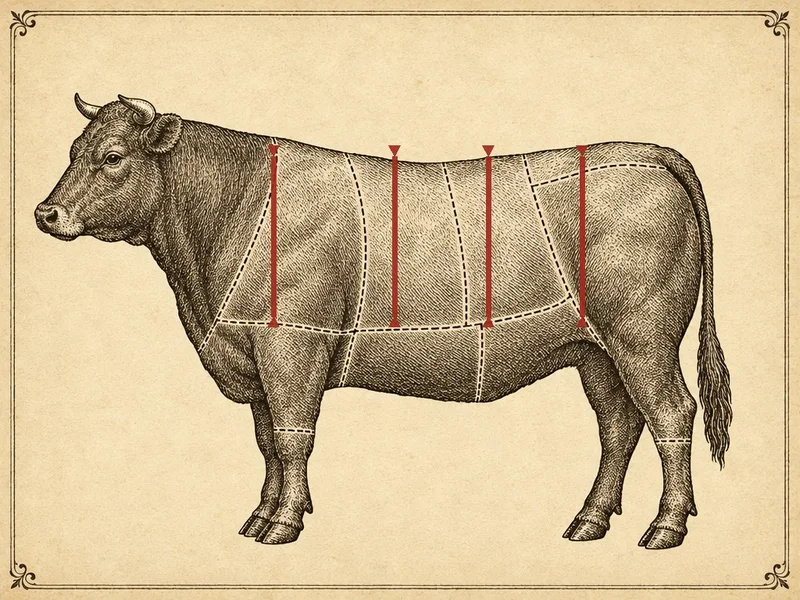
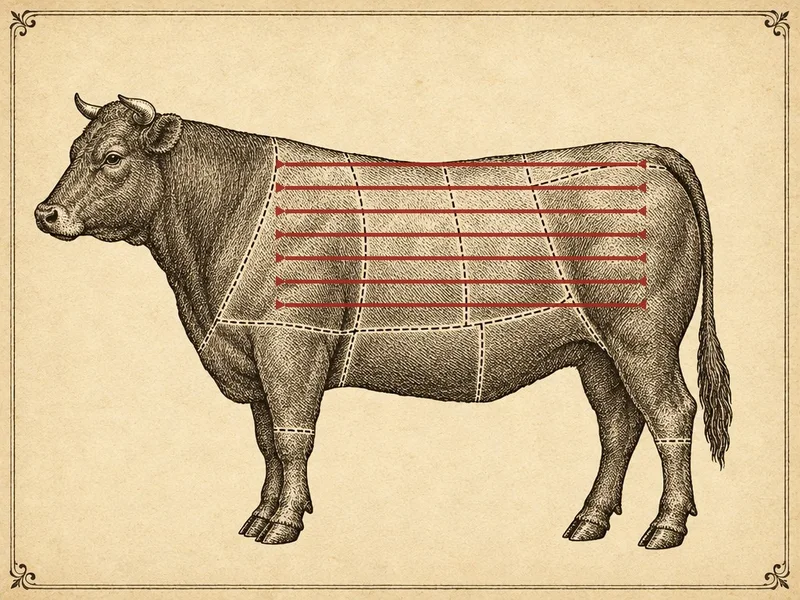
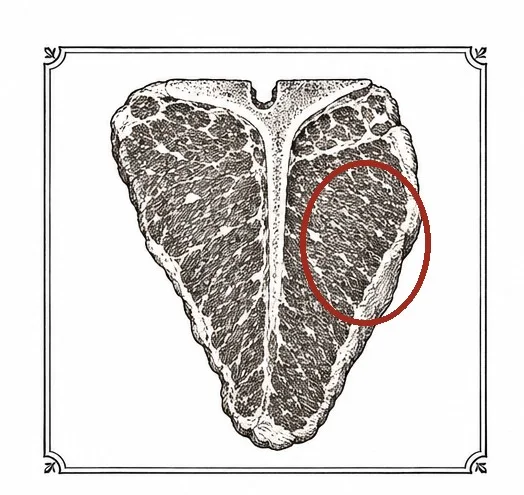
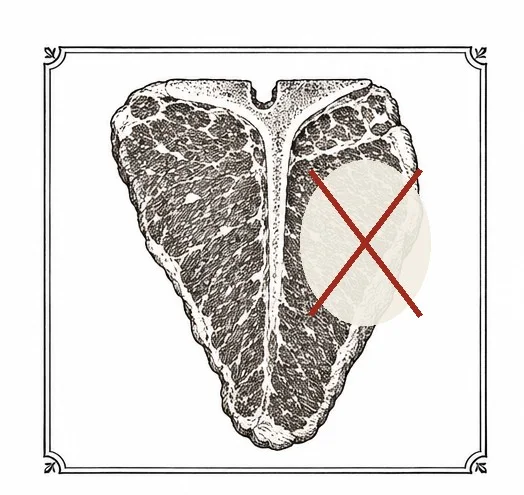
An engraving from the Big Butcher dining room — the same bull, three different ways to draw the line
Which steak is on the Big Butcher grill
So "type of steak" isn't biology — it's a local agreement about where to draw the line. At Big Butcher we have our own: on the grill — ribeye from a farm-raised bullock from Tatarstan. We call it the Western way, we cut it our own way — because the question was never where the name comes from, but what's on the plate.
And where does the ribeye sit on the bull, and what does the thick edge have to do with it? That’s in the next note.